The human mouth is a bustling laboratory where hundreds of chemical reactions unfold each time we chew. While most people associate saliva merely with moisture or digestion, this remarkable fluid serves as the stage for an intricate biochemical ballet. Scientists have discovered that mastication triggers a cascade of reactions far more complex than previously imagined, transforming every bite into a symphony of molecular interactions.
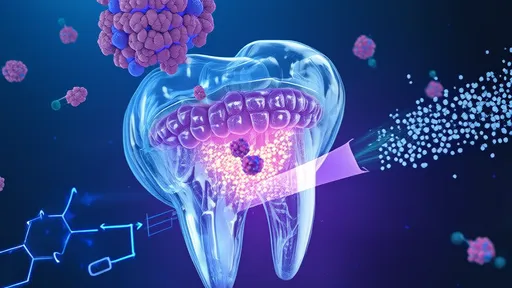
Saliva is far from being a simple lubricant. It contains over 1,000 distinct proteins and countless enzymes that spring into action the moment food enters the mouth. The mechanical act of chewing stimulates salivary glands to release this biochemical cocktail, which immediately begins breaking down carbohydrates through enzymes like amylase while simultaneously protecting tooth enamel and initiating immune responses against pathogens.
What makes this process extraordinary is how these reactions adapt in real-time to whatever we're eating. A bite of starchy bread prompts different enzymatic activity than fatty cheese or acidic fruit. Researchers using advanced spectrometry have observed that saliva composition dynamically changes during a single meal, with enzyme concentrations fluctuating based on the food's texture, pH, and chemical composition.
The first seconds of chewing represent the most chemically intense period. As teeth crush food into smaller particles, the increased surface area allows saliva to penetrate more effectively. This triggers rapid starch digestion while compounds like lysozyme attack bacterial cell walls. Simultaneously, salivary mucins form a slippery bolus while binding taste molecules to enhance flavor perception - a process that involves at least seventeen known chemical interactions.
Beyond digestion, the oral cavity serves as a sophisticated chemical sensing environment. Minor salivary glands release proteins that interact with tannins in tea or wine, mitigating their astringency. Other components neutralize acidic foods to protect tooth enamel, a buffering action that involves precise bicarbonate ion exchanges. These protective mechanisms occur within milliseconds through coordinated chemical pathways that researchers are only beginning to map.
Perhaps most surprisingly, chewing stimulates the salivary glands to release growth factors and antimicrobial peptides that promote oral tissue repair. This explains why mouth wounds heal faster than skin injuries - a phenomenon directly linked to the chemical-rich environment created during mastication. Recent studies have identified over sixty healing-related compounds activated by the mechanical stimulation of chewing.
The chemical complexity increases when considering how saliva interacts with different food temperatures. Hot coffee or ice cream each trigger unique thermal-dependent reactions, from altered enzyme kinetics to the activation of heat-shock proteins that protect oral cells. These adaptations occur seamlessly during normal eating, demonstrating saliva's remarkable responsiveness to environmental changes.
Modern analysis techniques have revealed that an average chewing session activates approximately 127 measurable chemical reactions in saliva. These range from simple pH adjustments to sophisticated protein folding changes that affect flavor perception. What's more, each person's salivary chemistry is as unique as a fingerprint, explaining why individuals can experience the same food so differently.
This emerging understanding of oral biochemistry has profound implications. Food scientists are redesigning products to optimize these chemical interactions, while medical researchers explore salivary diagnostics that could detect diseases from chewing-induced chemical changes. The humble act of chewing, it turns out, represents one of the most accessible yet sophisticated biochemical laboratories in human biology.
As research continues, scientists anticipate discovering even more reactions within this overlooked fluid. The saliva lab operates continuously from our first bite in the morning to our last snack at night, performing chemical transformations we're only beginning to appreciate. Next time you chew, remember - you're not just eating, you're conducting an orchestra of hundreds of simultaneous biochemical reactions.
By /Jul 7, 2025
By /Jul 7, 2025

By /Jul 7, 2025
By /Jul 7, 2025

By /Jul 7, 2025
By /Jul 7, 2025

By /Jul 7, 2025
By /Jul 7, 2025

By /Jul 7, 2025

By /Jul 7, 2025
By /Jul 7, 2025

By /Jul 7, 2025
By /Jul 7, 2025
By /Jul 7, 2025

By /Jul 7, 2025
By /Jul 7, 2025

By /Jul 7, 2025

By /Jul 7, 2025

By /Jul 7, 2025
By /Jul 7, 2025
