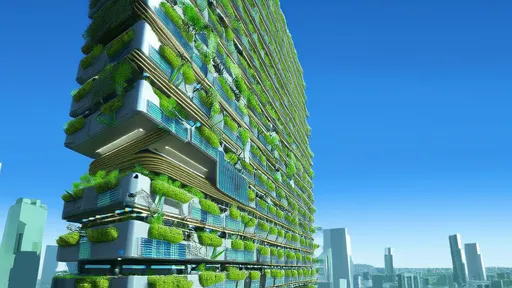
The concept of edible skyscrapers is no longer confined to the realm of science fiction. Architects and urban planners are now exploring the potential of modular vegetable gardens integrated into building facades, transforming concrete jungles into sustainable food-producing ecosystems. This innovative approach not only addresses food security concerns but also redefines urban aesthetics and environmental responsibility.
Imagine walking through a city where towering buildings are draped in lush greenery, their exteriors bursting with tomatoes, lettuce, and herbs. These edible facades are more than just vertical gardens; they are functional agricultural systems designed to feed urban populations. The modular nature of these installations allows for customization based on climate, available sunlight, and the types of crops most suited to the local diet.
The technology behind these edible buildings is both sophisticated and accessible. Hydroponic and aeroponic systems eliminate the need for soil, reducing weight and maintenance requirements. Automated irrigation and nutrient delivery systems ensure optimal growing conditions, while sensors monitor plant health in real time. This combination of agriculture and architecture represents a seismic shift in how we think about urban spaces and their potential to contribute to food production.
One of the most compelling aspects of edible facades is their ability to democratize access to fresh produce. In food deserts—urban areas where affordable, nutritious food is hard to come by—these living walls could provide a reliable source of vegetables and herbs. Community members might even participate in tending the gardens, fostering a sense of ownership and connection to their food sources.
The environmental benefits extend far beyond local food production. Edible facades act as natural insulation, reducing energy costs for heating and cooling. They absorb carbon dioxide, mitigate the urban heat island effect, and provide habitats for pollinators. In cities plagued by air pollution, these green walls can filter particulate matter, creating healthier microclimates for residents.
Critics initially questioned the structural implications of adding vegetation to building exteriors, but engineers have developed lightweight, durable solutions. The modular panels are designed to distribute weight evenly and withstand wind loads. Waterproof membranes protect the building's integrity, while clever drainage systems prevent excess moisture from causing damage.
The aesthetic transformation of urban landscapes through edible architecture cannot be overstated. Grey concrete monotony gives way to vibrant, living surfaces that change with the seasons. These buildings become landmarks, sparking conversations about sustainability and our relationship with food. The psychological benefits of increased greenery in urban environments are well-documented, with studies showing reductions in stress and improvements in overall well-being.
Implementation challenges remain, particularly regarding maintenance and harvesting logistics. Some projects have addressed this by incorporating robotic systems that can prune plants and harvest ripe produce. Others have created partnerships with local restaurants or grocery stores, ensuring the food reaches consumers efficiently. The economic models vary, with some buildings treating the produce as a community resource while others create revenue streams through sales.
Pioneering examples already exist across the globe, from Singapore's sky gardens to Milan's vertical forests. Each project offers valuable lessons about crop selection, maintenance protocols, and community engagement. As the technology matures, costs are expected to decrease, making edible architecture more accessible to cities of all sizes.
The potential for scaling this concept is enormous. Imagine entire city blocks where every building contributes to the local food supply. The reduction in food miles alone could significantly lower carbon emissions associated with transportation. Urban agriculture of this scale might one day complement rural farming, creating a more resilient and distributed food system.
Educational institutions are beginning to incorporate edible facades into their campuses, using them as living laboratories. Students monitor growth patterns, study the ecosystems that develop around the gardens, and learn about sustainable agriculture firsthand. This hands-on experience cultivates a new generation of environmentally conscious architects, engineers, and urban planners.
As climate change intensifies and urban populations grow, solutions like edible architecture will become increasingly vital. They represent a holistic approach to urban design—one that acknowledges the interconnectedness of food systems, environmental health, and human well-being. The edible skyscraper is more than an architectural novelty; it's a blueprint for sustainable urban living in the 21st century.
The movement toward edible buildings reflects a broader cultural shift in how we view our cities. No longer just spaces for living and working, urban areas are being reimagined as productive landscapes that give back to their inhabitants. This paradigm change could redefine what it means to be a sustainable city in an era of climate uncertainty and rapid urbanization.
While challenges remain in perfecting the technology and making it economically viable on a large scale, the progress so far is encouraging. Edible architecture stands at the intersection of innovation and necessity, offering a delicious solution to some of our most pressing urban challenges. The cities of tomorrow may very well be both nourishing and nourished by their own structures.

By /Jul 7, 2025

By /Jul 7, 2025
By /Jul 7, 2025

By /Jul 7, 2025

By /Jul 7, 2025

By /Jul 7, 2025

By /Jul 7, 2025

By /Jul 7, 2025

By /Jul 7, 2025

By /Jul 7, 2025

By /Jul 7, 2025

By /Jul 7, 2025

By /Jul 7, 2025

By /Jul 7, 2025

By /Jul 7, 2025

By /Jul 7, 2025

By /Jul 7, 2025

By /Jul 7, 2025

By /Jul 7, 2025

By /Jul 7, 2025
