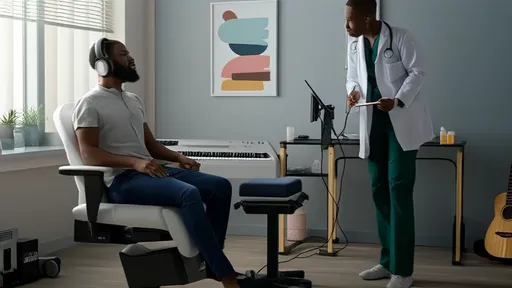
The integration of music therapy into mainstream healthcare has gained remarkable momentum in recent years. Once considered an alternative or complementary approach, it now occupies a legitimate space in clinical settings, backed by a growing body of empirical evidence. Hospitals, rehabilitation centers, and mental health facilities increasingly recognize its potential to address complex physiological and psychological conditions. Unlike pharmacological interventions, music therapy offers a non-invasive, patient-centered modality that resonates across age groups and cultural boundaries.
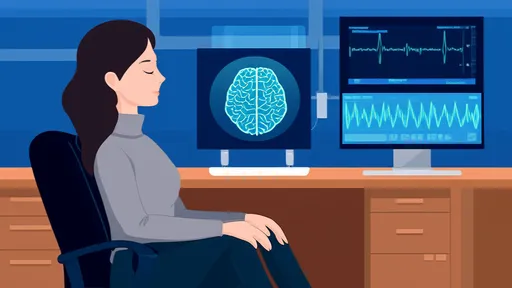
One of the most compelling developments in this field is its application in neurology. Researchers have observed how rhythmic auditory stimulation can facilitate motor rehabilitation in patients with Parkinson’s disease or stroke survivors. The brain's inherent ability to synchronize movement with sound—a phenomenon known as entrainment—has opened new avenues for gait training and coordination exercises. Clinicians report cases where individuals who struggled with conventional physiotherapy achieved breakthroughs when music was introduced into their treatment plans. This isn’t merely about motivation; it reflects the profound neuroplasticity that music can activate.
Mental health represents another frontier where music therapy demonstrates exceptional versatility. For individuals grappling with trauma, depression, or anxiety disorders, verbal expression often falls short. Here, music becomes a conduit for emotions that evade language. Improvisational techniques allow patients to externalize inner turmoil without the pressure of articulation, while receptive methods—like guided listening—can regulate autonomic nervous system responses. Psychiatric units have documented reduced agitation levels among participants following group drumming sessions, suggesting its role in modulating stress hormones such as cortisol.
Pediatric care has also embraced music therapy with striking results. Neonatal intensive care units (NICUs) employ live lullabies to stabilize preterm infants’ vital signs, leveraging the predictable tempo and harmonic structure to mimic maternal sounds. Children with autism spectrum disorder (ASD) frequently exhibit enhanced social engagement during structured musical interactions, where turn-taking or shared instrument play fosters communication skills otherwise hindered by their condition. These applications underscore music’s unique capacity to bypass cognitive barriers and access deeper layers of human connection.
Oncological support services have adopted music therapy to alleviate the multifaceted distress associated with cancer treatment. Chemotherapy sessions accompanied by patient-selected playlists not only distract from procedural discomfort but also mitigate anticipatory nausea—a testament to the mind-body interplay. Bereavement programs within palliative care utilize songwriting or lyric analysis to help individuals process grief, transforming abstract sorrow into tangible creative output. Such interventions highlight how melodic elements can anchor fragmented emotional states during life’s most vulnerable chapters.
Despite these advances, challenges persist in standardizing protocols and securing institutional buy-in. Reimbursement policies lag behind clinical demand, leaving many practitioners to navigate fragmented funding landscapes. Yet, the trajectory is unmistakable: from postoperative recovery wards to dementia care homes, the therapeutic resonance of music continues to redefine what healing sounds like. As interdisciplinary collaborations flourish, so too does our understanding of how harmonies and rhythms can orchestrate recovery in ways words alone cannot.
By /Jul 14, 2025
By /Jul 14, 2025
By /Jul 14, 2025

By /Jul 14, 2025

By /Jul 14, 2025

By /Jul 14, 2025
By /Jul 14, 2025
By /Jul 14, 2025

By /Jul 14, 2025

By /Jul 14, 2025

By /Jul 14, 2025

By /Jul 14, 2025
By /Jul 14, 2025

By /Jul 14, 2025

By /Jul 14, 2025
By /Jul 14, 2025
By /Jul 14, 2025

By /Jul 14, 2025
By /Jul 14, 2025

By /Jul 14, 2025
